

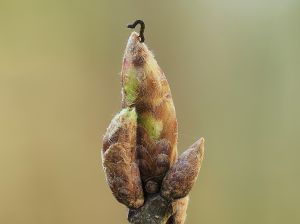
A paper demonstrating tree strategy to avoid caterpillars’ attack
A paper published in Nature Ecology and Evolution by Soumen Mallick and colleagues, including Freerk Molleman from our institute, uses detailed satellite images from forests in Germany to show that trees tend to show delayed budburst the spring after they have been severely attacked by caterpillars. They also showed that this delay then reduces insect herbivory. As climate warming causes trees to have earlier budburst, it also increases insect herbivory, which delays budburst. Thus, this indirect effect of warming on budburst can explain why trees respond less to warming than was expected based on direct effects on trees alone. The delayed budburst might be a result of reduced resources, or could be adaptive phenotypic plasticity: trees predicting high herbivory pressure based on previous year’s experience, and using delayed budburst to defend against the herbivores.